
A] Prelude
For more information on pension systems, risk and coverage, feel free to visit our dedicated webpages:
- https://expatpensionholland.nl/europe-expat-pensions
- https://expatpensionholland.nl/global-pillars-systems
- https://expatpensionholland.nl/global-investments-risks-0
- https://expatpensionholland.nl/global-social-security-coverage
For even more information about this topic feel free to visit the following external sites:
- https://www.pensionfundsonline.co.uk/content/country-profiles/bulgaria/88
- https://economy-finance.ec.europa.eu/document/download/c4dfe1c6-25c6-43b1-90a4-1e9e2d1d2000_en?filename=bg_-_ar_2021_final_pension_fiche.pdf&prefLang=da
B] The Issue
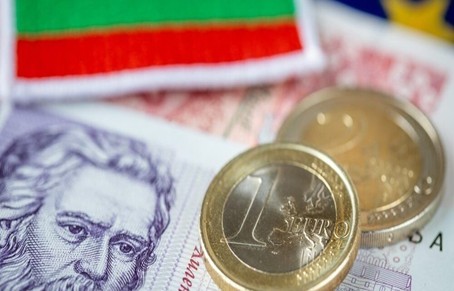
Bulgaria’s pension system stands at a critical juncture as the country prepares to join the Eurozone in 2026. This transition will bring pensions denominated in euros instead of leva, prompting questions about the system’s future stability amid demographic shifts and budgetary pressures. Our analysis explores the structure of Bulgaria’s pension scheme, current challenges, and projections looking ahead to 2070.
C] The Details
The Bulgarian pension system consists of three pillars.
1] The first pillar is the state social security system, funded through the pay-as-you-go model. This means that contributions collected during the month are transferred to the treasury and then used to pay current pensioners the following month. The state budget supplements the system with transfers to cover shortfalls.
2] The second pillar is mandatory public pension insurance, established in 2000, which operates on a capital-funded basis with defined contributions.
Insured individuals contribute 5% of their income—2.4% from the employee and 2.6% from the employer, to pension funds managed by private insurance companies. These funds aim to generate additional returns on the invested contributions and provide a safety net against possible crises in the state social security system.
3] The third pillar comprises voluntary additional pension schemes, where individuals choose their contribution levels and pension plans freely. There are also professional pension funds designed for certain occupations, where employers contribute a portion of the insured person’s income, adding an extra layer of financial protection.
D] Entry in Euro Zone
By 2026, as Bulgaria joins the Eurozone, pensions will be paid in euros. To assess the system’s sustainability, analysts examine the relationship between pension expenditures and GDP, the country’s aging population, and forecasts by the National Statistical Institute.
In 2024, the social security budget included expenses exceeding 24 billion leva, covering pensions, social benefits, and related programs. However, revenue from social security contributions was just over 12 billion leva, resulting in a budget deficit close to 48%!
This vast gap is compensated by transfers from the state budget. That same year, Bulgaria had approximately 2.2 million insured persons and just over 2 million pensioners receiving benefits. Pensioners and benefit recipients make up about 32% of the population, while those insured and paying contributions amount to 35%. Incredible numbers.
E] Looking Ahead
Looking ahead, the European Commission projects that by 2050, 26.5% of Bulgaria’s population will be over 65, increasing to 30.2% by 2070.
These figures place Bulgaria in line with neighboring Balkan countries: Croatia forecasts 30% by 2050 and 32.3% by 2070, Greece 35.5% and 33%, respectively, and Romania 28.7% and 29.1%. While these aging trends are comparable regionally, total expenditures on old-age pensions relative to GDP show some differences.
Bulgaria’s pension spending accounted for 18.2% of GDP in 2022, with forecasts of 19.2% by 2030, then stabilizing around 18.8% through 2050 and 2070. Croatia shows similar numbers, while Greece’s pension expenditure is higher, ranging around 21–23% of GDP, and Romania’s is lower but rising to about 18.8% by 2050.
These comparisons suggest Bulgaria’s pension system maintains a relatively steady share of GDP devoted to pensions, even surpassing some neighbors.
F] Finally
The upcoming integration into the Eurozone will test Bulgaria’s ability to manage these demographic and fiscal pressures. The system might require reforms, such as raising social security contribution rates or altering pension benefit structures, to remain sustainable in the long term.
Ultimately, the question remains whether Bulgaria’s pension framework, as currently structured, can weather the demands of an aging population while transitioning to the euro, or if a more comprehensive overhaul will be necessary to secure financial stability for future retirees
G] EIOPA’s Vision
In order to provide additional ingight, we always like to include the vision of EU’s pension and insurance authority EIOPA on the future of pensions with the EU.
Which you can see in the following link: https://www.eiopa.europa.eu/unlocking-potential-pensions-europe-2025-04-01_en